
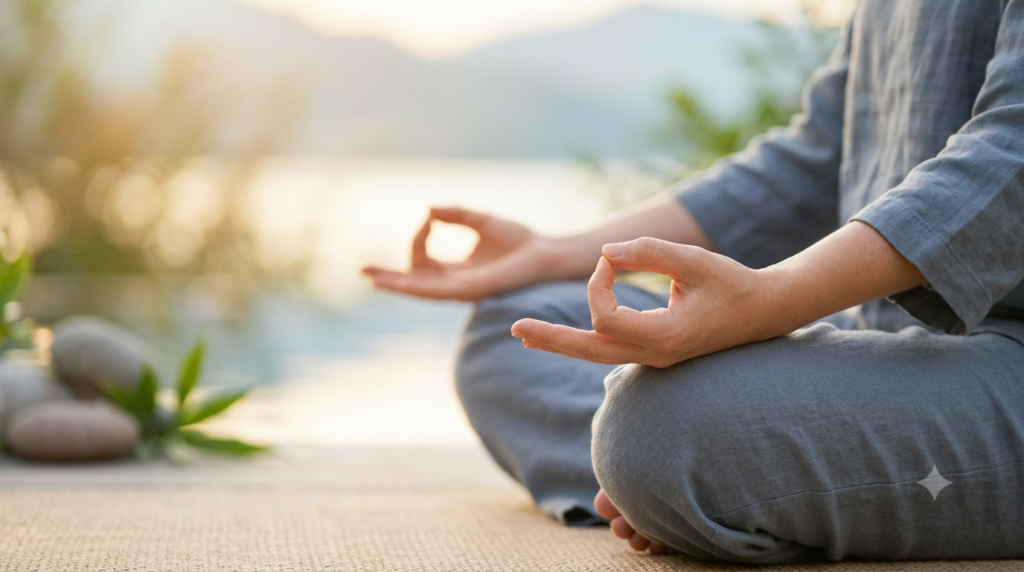
In a world full of constant notifications, racing thoughts, and endless daily demands, finding a quiet moment of focus can feel nearly impossible. While many turn to physical yoga poses (asanas) or deep breathing techniques (pranayama) to regain balance, one of the most powerful tools for mental clarity resides right at your fingertips: Gyan Mudra (often spelled Jnana Mudra).
Known as the “Gesture of Wisdom” or “Mudra of Knowledge,” Gyan Mudra is perhaps the most recognized hand gesture in yoga and meditation traditions worldwide. Whether you see it depicted in ancient statues of the Buddha or practiced in modern yoga studios, this simple hand position holds deep spiritual, psychological, and physiological benefits.
In this guide, we’ll explore the meaning, history, science, and practice of Gyan Mudra so you can integrate this transformative gesture into your daily routine.
What is Gyan Mudra?
The word Gyan (or Jnana) comes from the Sanskrit root word Jna, which translates to “knowledge,” “wisdom,” or “higher intellect.” The word Mudra means “seal,” “gesture,” or “mark.”
Together, Gyan Mudra translates to the Seal of Wisdom.
It is a psycho-physical hand gesture used during meditation and breathing practices to route subtle energy through the body, calm an overactive mind, and foster deep concentration.
The Symbolic Meaning Behind the Fingers
In Ayurvedic philosophy and yoga therapy, our hands are miniature maps of the entire cosmos. Each finger corresponds to one of the five primary elements (Pancha Mahabhutas):
-
Thumb: Fire (Agni) — representing the Supreme Soul, divine consciousness, or ego.
-
Index Finger: Air (Vayu) — representing individual consciousness and the human mind.
-
Middle Finger: Space/Ether (Akasha) — representing patience and purity.
-
Ring Finger: Earth (Prithvi) — representing stability and physical form.
-
Little Finger: Water (Jala) — representing emotion and fluid communication.
The Sacred Union of Thumb and Index Finger
When you practice Gyan Mudra, you bring the tip of the index finger (Air/individual self) to touch the tip of the thumb (Fire/universal consciousness).
This light touch represents the union of the individual mind with universal wisdom. It forms a closed circuit, stopping the dissipation of subtle life-force energy (prana) through the fingers and redirecting it back into the nervous system.
The Health and Mental Benefits of Gyan Mudra
Practicing Gyan Mudra consistently offers a wide range of benefits for your body, mind, and spirit.
1. Sharpens Focus and Concentration
By connecting the Fire and Air elements, Gyan Mudra stimulates brain function and neural pathways. It enhances memory retention, sharpens focus, and clears away mental brain fog. It is an exceptional tool for students, creative workers, and anyone needing mental stamina.
2. Relieves Stress, Anxiety, and Insomnia
The light pressure at the tips of the thumb and index finger activates acupressure points connected to the pituitary and endocrine glands. This stimulation calms the sympathetic nervous system (the “fight or flight” response), reducing cortisol levels, easing anxiety, and preparing the body for restful sleep.
3. Balances the Root (Muladhara) and Third Eye (Ajna) Chakras
Gyan Mudra grounds energy down toward the base of the spine while simultaneously elevating consciousness toward the intuitive center between the brows. This creates a state of balanced stability and spiritual awareness.
4. Enhances Meditation Depth
For practitioners struggling with a “monkey mind” during sit-down meditation, holding Gyan Mudra provides a physical anchor. The sensation in the fingertips gives the subconscious mind a point of focus, making it easier to slip into deeper meditative states (Dhyana).
How to Practice Gyan Mudra: Step-by-Step
You can practice Gyan Mudra anywhere, but it is most effective when combined with a comfortable seated posture and rhythmic breathing.
Step 1: Find a Comfortable Seat
Sit in a comfortable cross-legged posture on the floor (such as Sukhasana or Padmasana) or upright in a firm chair with your feet flat on the ground. Keep your spine long, shoulders relaxed, and chest open.
Step 2: Position Your Hands
Rest the backs of your hands on your knees or thighs, with your palms facing upward toward the ceiling.
Step 3: Form the Gesture
Gently bring the tip of your index finger to touch the tip of your thumb on both hands. Apply only very light pressure—just enough to feel the contact without creating tension in your fingers.
Step 4: Extend the Remaining Fingers
Keep the middle, ring, and pinky fingers extended gently outward. They do not need to be rigid; let them rest naturally in an extended position.
Step 5: Breathe and Hold
Close your eyes and bring your attention to your breath or the point of contact between your thumb and index finger. Hold the mudra for 15 to 30 minutes during your meditation or pranayama session.
Variations of Gyan Mudra
Depending on your intention during practice, you can adapt the orientation or style of the mudra:
Active vs. Passive Gyan Mudra
-
Passive Gyan Mudra (Palms Up): Promotes receptivity, openness, and connection with higher wisdom. Ideal for morning practice and deep meditation.
-
Grounded Gyan Mudra / Abhaya Mudra (Palms Down): Placing your palms face-down on your knees encourages grounding, warmth, and inner stability. Perfect for evening practice or moments of high anxiety.
Purna Gyan Mudra (The Full Gesture)
In this variation, instead of touching fingertip-to-fingertip, you curl the index finger under the base of the thumb. This variation is particularly effective for soothing intense emotional volatility or deep-seated restlessness.
Frequently Asked Questions (FAQ)
-
How long should I practice Gyan Mudra every day?
Ans: For noticeable benefits, aim for 30 to 45 minutes daily. You can do this in one session or split it into three 15-minute intervals throughout the day.
-
Can beginners practice this hand gesture?
Ans: Yes! Gyan Mudra is completely safe, gentle, and accessible for practitioners of all levels, ages, and physical conditions.
-
Are there any side effects?
Ans: There are no negative side effects associated with Gyan Mudra. It can be practiced freely at any time of day, whether you are meditating, watching television, walking, or riding on public transit.
Final Thoughts: Bring Clarity to Your Daily Flow
You don’t need expensive equipment or hours of free time to cultivate mental clarity and peace. With Gyan Mudra, the key to focus, emotional balance, and inner wisdom is literally in your hands.
The next time you roll out your yoga mat or sit down for your daily meditation, take a deep breath, join your index finger to your thumb, and allow the quiet intelligence of this ancient hand gesture to ground your mind and uplift your spirit.
Visit Our website: https://yogaflexie.com/