
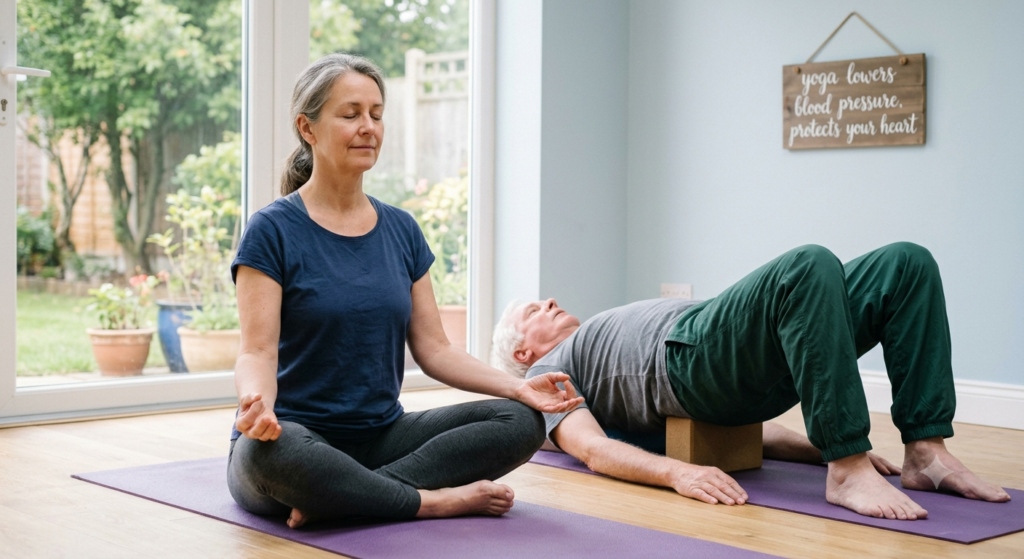
High blood pressure, also known as hypertension, is one of the leading causes of heart disease, stroke, and other cardiovascular problems. It often develops without noticeable symptoms, which is why it is commonly referred to as the “silent killer.” Fortunately, adopting healthy lifestyle habits can significantly reduce your risk, and yoga is one of the most effective natural practices to support heart health.
Yoga is much more than stretching or improving flexibility. It combines physical postures (asanas), breathing techniques (pranayama), and meditation to create a complete mind-body practice. This combination helps reduce stress, improve blood circulation, strengthen the cardiovascular system, and promote overall well-being. Whether you’re a beginner or an experienced practitioner, adding yoga to your daily routine can have lasting benefits for your heart.
How Yoga Helps Lower Blood Pressure
Stress is one of the biggest contributors to high blood pressure. When you’re under constant stress, your body releases hormones like cortisol and adrenaline, causing your heart to beat faster and your blood vessels to narrow. Over time, this can lead to consistently high blood pressure.
Yoga helps reverse this response by activating the parasympathetic nervous system, often called the “rest and digest” system. Slow movements, mindful breathing, and meditation encourage relaxation, helping your heart rate slow down and your blood vessels relax.
Regular yoga practice also improves oxygen flow throughout the body, allowing your heart to pump blood more efficiently. As a result, many people experience lower blood pressure levels, reduced stress, and improved cardiovascular function.
Heart Health Benefits of Yoga
Practicing yoga consistently offers a wide range of benefits that support a healthy heart. Here are some of the most important advantages:
- Helps lower high blood pressure by reducing stress and relaxing blood vessels.
- Improves blood circulation, allowing oxygen and nutrients to reach organs more efficiently.
- Reduces stress and anxiety, which are major risk factors for heart disease.
- Supports healthy cholesterol levels by encouraging an active lifestyle and reducing inflammation.
- Strengthens the cardiovascular system, improving the heart’s overall efficiency.
- Enhances lung capacity and breathing, increasing oxygen delivery throughout the body.
- Improves sleep quality, giving your heart the rest it needs to recover.
- Helps maintain a healthy weight, reducing the strain on your heart.
- Encourages mindful living, making it easier to adopt healthier eating and exercise habits.
- Boosts overall emotional well-being, which positively impacts heart health.
Together, these benefits make yoga an excellent addition to a heart-healthy lifestyle.
Best Yoga Poses for Heart Health
Certain yoga poses are especially beneficial for improving circulation, expanding the chest, and reducing stress.
Mountain Pose (Tadasana)
This simple standing posture improves posture, balance, and breathing awareness while encouraging proper circulation.
Bridge Pose (Setu Bandhasana)
Bridge Pose gently opens the chest, strengthens the back muscles, and improves blood flow to the heart.
Cobra Pose (Bhujangasana)
Cobra Pose expands the chest, improves lung capacity, and strengthens the muscles that support healthy posture and breathing.
Child’s Pose (Balasana)
A deeply relaxing posture that calms the nervous system, reduces stress, and encourages slow, deep breathing.
Legs-Up-the-Wall Pose (Viparita Karani)
This restorative pose promotes healthy circulation, reduces swelling in the legs, and helps the body relax after a long day.
Practicing these poses for 15–20 minutes several times a week can contribute to better cardiovascular health.
Breathing Techniques That Support Heart Health
Breathing exercises, known as pranayama, are an essential part of yoga. They help regulate the nervous system and reduce stress, making them especially beneficial for people with high blood pressure.
Some effective breathing practices include:
- Anulom Vilom (Alternate Nostril Breathing): Promotes relaxation and balances the nervous system.
- Bhramari Pranayama (Bee Breath): Helps reduce anxiety and calm the mind.
- Diaphragmatic Breathing: Encourages deeper breathing and improves oxygen delivery throughout the body.
Practicing these breathing techniques for just 5–10 minutes daily can have a positive impact on both blood pressure and overall heart health.
Tips to Get the Most Heart Health Benefits from Yoga
To maximize the benefits of yoga, keep these simple tips in mind:
- Practice yoga 4–5 days a week for 20–30 minutes.
- Focus on slow, controlled breathing throughout each session.
- Combine yoga with regular walking or light cardio exercise.
- Eat a heart-healthy diet rich in fruits, vegetables, whole grains, and healthy fats.
- Stay hydrated before and after your practice.
- Avoid pushing your body beyond its limits, especially if you have a heart condition.
- Be consistent—small daily efforts lead to long-term improvements.