
Do you often find yourself staring at the ceiling long after bedtime? You’re not alone. Millions of people struggle with falling asleep due to stress, anxiety, screen time, and busy schedules.
While sleep supplements and medications may offer temporary relief, many people are turning to yoga as a natural way to improve sleep quality. Gentle yoga poses combined with mindful breathing can help calm the nervous system, release physical tension, and prepare the body for restful sleep.
In this guide, we’ll explore how yoga supports better sleep and the six best yoga poses to practice before bed.
Can Yoga Really Help You Sleep Better?
Research suggests that yoga may help improve sleep quality by reducing stress and promoting relaxation. Yoga encourages deep breathing, mindfulness, and gentle movement, which can activate the body’s “rest and digest” response and lower stress levels. Studies have also shown that regular yoga practice may help people fall asleep faster, stay asleep longer, and experience better overall sleep quality.
When practiced in the evening, restorative yoga signals to your body that it’s time to slow down and unwind.
Benefits of Practicing Yoga Before Bed
1. Calms the Nervous System
Gentle yoga helps shift the body away from the stress-driven “fight or flight” mode into a more relaxed state.
2. Reduces Stress and Anxiety
Mindful breathing and slow movements help quiet racing thoughts that often interfere with sleep.
3. Relieves Physical Tension
Many people carry tension in their neck, shoulders, hips, and lower back. Bedtime yoga helps release these areas, making it easier to relax.
4. Improves Sleep Quality
Regular yoga practice has been associated with deeper, more restorative sleep and fewer nighttime awakenings.
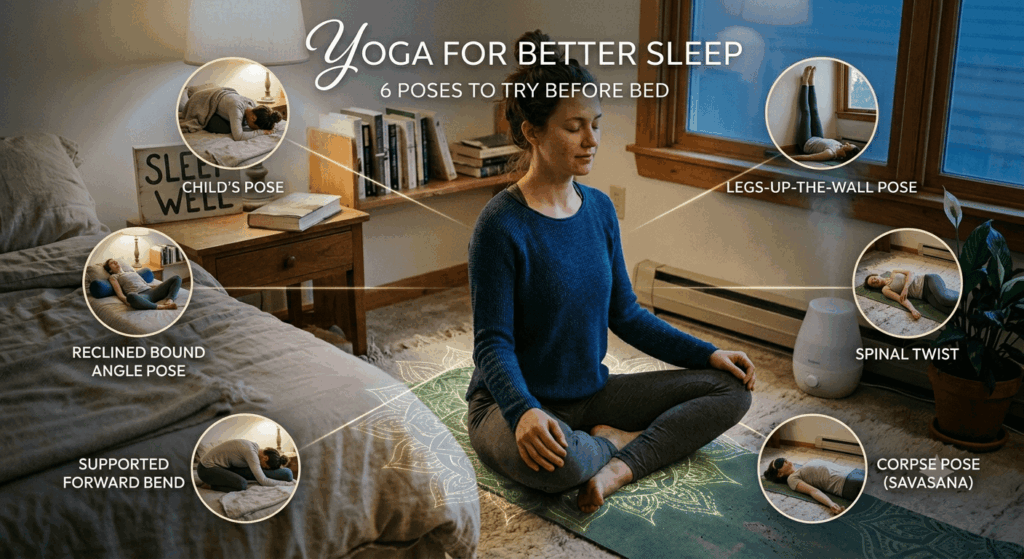
6 Yoga Poses to Try Before Bed
Practice these poses slowly and gently. Hold each pose for 1–3 minutes while focusing on slow, deep breaths.
1. Child’s Pose (Balasana)
Child’s Pose is one of the most relaxing yoga postures. It gently stretches the back, hips, and shoulders while encouraging deep breathing.
How to Do It:
- Kneel on the floor.
- Sit back on your heels.
- Fold forward and extend your arms in front of you.
- Rest your forehead on the mat.
Benefits:
- Calms the mind.
- Releases tension in the lower back.
2. Legs-Up-The-Wall Pose (Viparita Karani)
This restorative pose is often recommended by yoga teachers and sleep experts for relaxation before bed.
How to Do It:
- Sit beside a wall.
- Lie on your back and swing your legs up the wall.
- Relax your arms by your sides.
Benefits:
- Reduces mental fatigue.
- Promotes circulation.
- Helps quiet a busy mind.
3. Reclined Butterfly Pose (Supta Baddha Konasana)
A gentle hip-opening pose that encourages relaxation and deeper breathing.
How to Do It:
- Lie on your back.
- Bring the soles of your feet together.
- Let your knees fall outward.
- Place cushions under your knees if needed.
Benefits:
- Opens the hips and chest.
- Relaxes the body.
- Encourages slow breathing.
4. Seated Forward Fold (Paschimottanasana)
Forward bends are known for their calming effect on the nervous system.
How to Do It:
- Sit with your legs extended.
- Slowly fold forward from your hips.
- Rest your hands wherever comfortable.
Benefits:
- Releases tension in the back and hamstrings.
- Encourages mindfulness.
- Helps reduce stress.
5. Supine Spinal Twist (Supta Matsyendrasana)
This gentle twist helps release tension accumulated throughout the day.
How to Do It:
- Lie on your back.
- Hug one knee into your chest.
- Guide it across your body.
- Extend the opposite arm and look in that direction.
Benefits:
- Relaxes the spine.
- Releases lower back tension.
- Promotes a sense of calm.
6. Corpse Pose (Savasana)
Often practiced at the end of yoga sessions, Savasana is designed for complete relaxation.
How to Do It:
- Lie flat on your back.
- Let your arms and legs relax naturally.
- Close your eyes and focus on your breath.
Benefits:
- Lowers stress levels.
- Encourages full-body relaxation.
- Prepares the body for sleep.
A Simple 10-Minute Bedtime Yoga Routine
If you’re short on time, try this sequence:
- Child’s Pose – 2 minutes
- Seated Forward Fold – 2 minutes
- Reclined Butterfly Pose – 2 minutes
- Legs-Up-The-Wall – 2 minutes
- Corpse Pose – 2 minutes
Practicing this routine consistently can help signal to your body that it’s time to rest.
Tips for Better Sleep Alongside Yoga
To maximize the benefits of bedtime yoga:
- Avoid screens at least 30 minutes before bed.
- Keep your bedroom cool and dark.
- Practice deep breathing during each pose.
- Stay consistent with your sleep schedule.
- Avoid intense workouts right before bedtime.
Final Thoughts
Good sleep is essential for both physical and mental well-being. If stress, anxiety, or a busy mind is keeping you awake at night, yoga can be a simple and natural solution.
By incorporating these six calming poses into your bedtime routine, you can create a peaceful transition from a hectic day to a restful night’s sleep. Start with just a few minutes each evening, listen to your body, and enjoy the calming benefits that yoga brings to your sleep routine.
Remember: better sleep begins with a calmer mind and a more relaxed body.